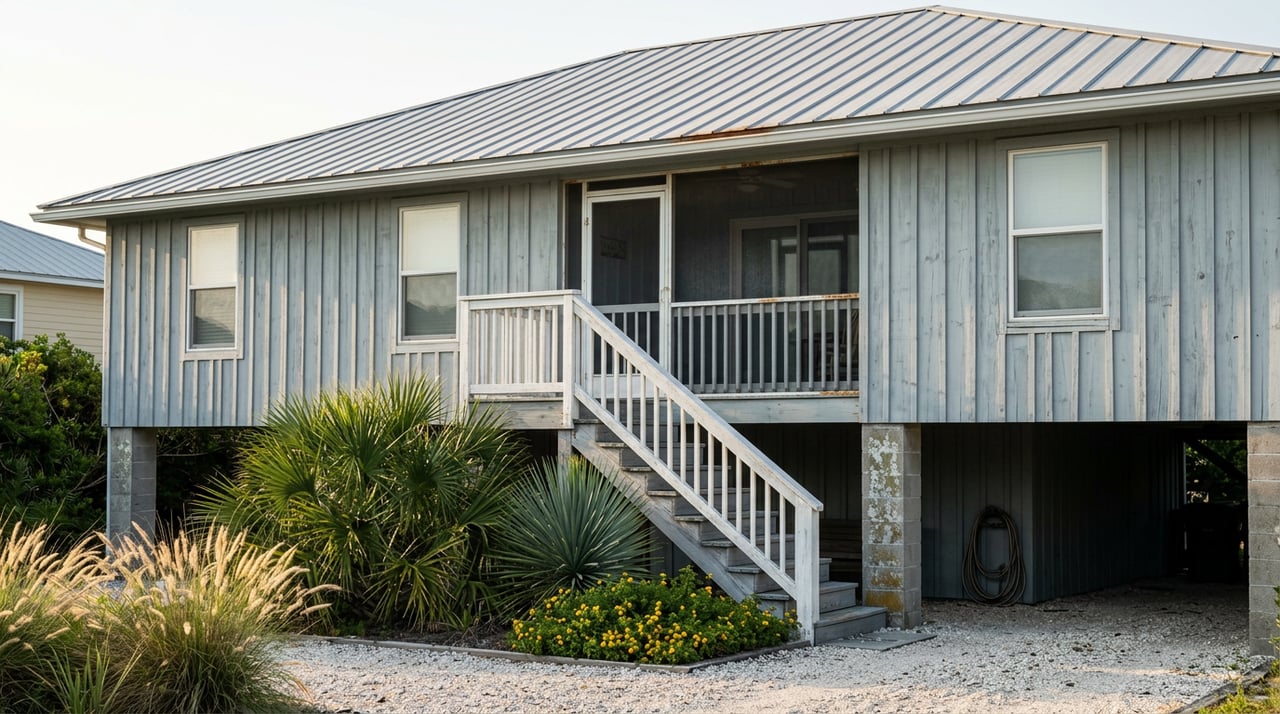
The St. Augustine Beach Rental Cap That Skips the Condo You're Touring
Ask around St. Augustine Beach about short-term rentals and you'll hear the same number over and over: 100. That's the permit cap, the thing agents mention when a buyer says they want beach income. It sounds like the ceiling. It sounds like the constraint you're planning around.
It isn't, for a lot of buyers. If the property you're looking at is a condo, that cap doesn't apply to you at all. And if the address you're circling sits a few blocks outside city limits, neither does the rest of the ordinance. St. Augustine Beach, the separate City of St. Augustine, and unincorporated St. Johns County each run their own short-term rental rulebook, and the line between them isn't something you can see from a listing photo.
Start with what's actually true inside St. Augustine Beach city limits. Transient rentals are only permitted in two land use categories: Commercial, or Medium-Density Residential. In Medium-Density Residential, the city caps the number of permits at 100. In Commercial, there's no cap at all. That distinction alone splits the market before you even get to condos: a single-family house in a Medium-Density Residential pocket is competing for one of a finite set of permits, while a property zoned Commercial isn't competing for anything.
This is the number that gets repeated at open houses and in listing chatter, and it's real. What tends to get left out is who it applies to.
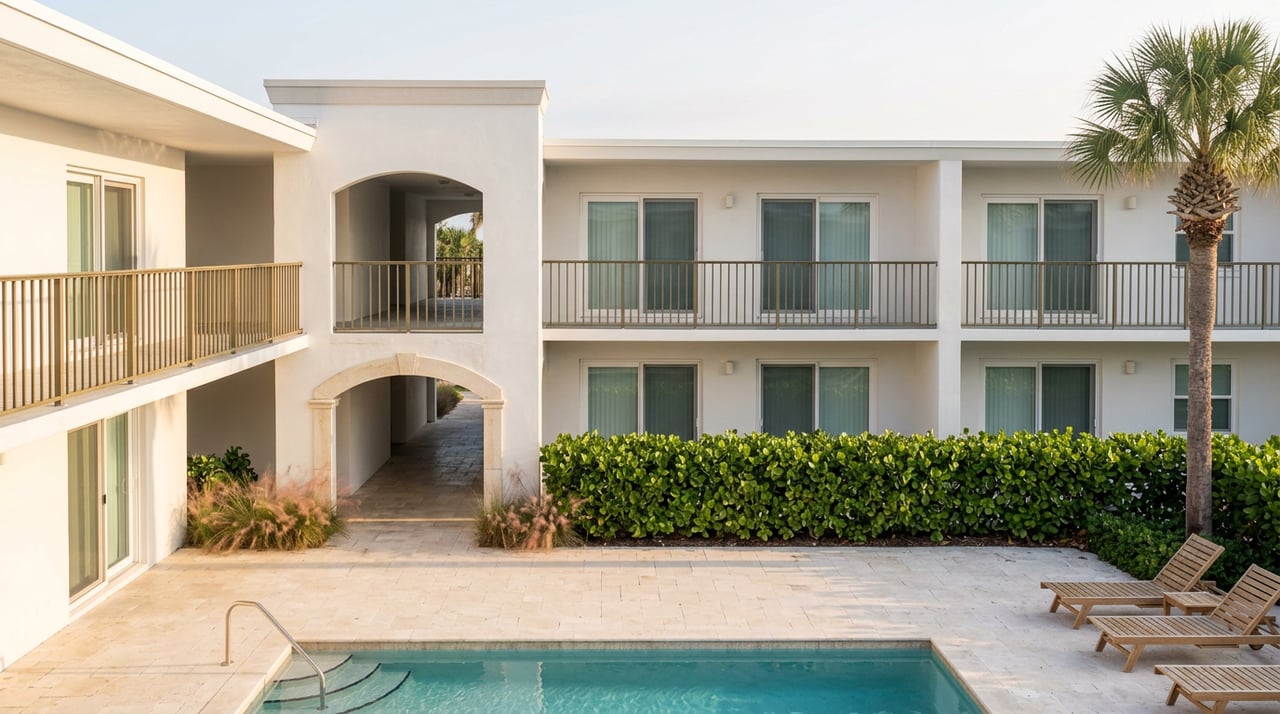
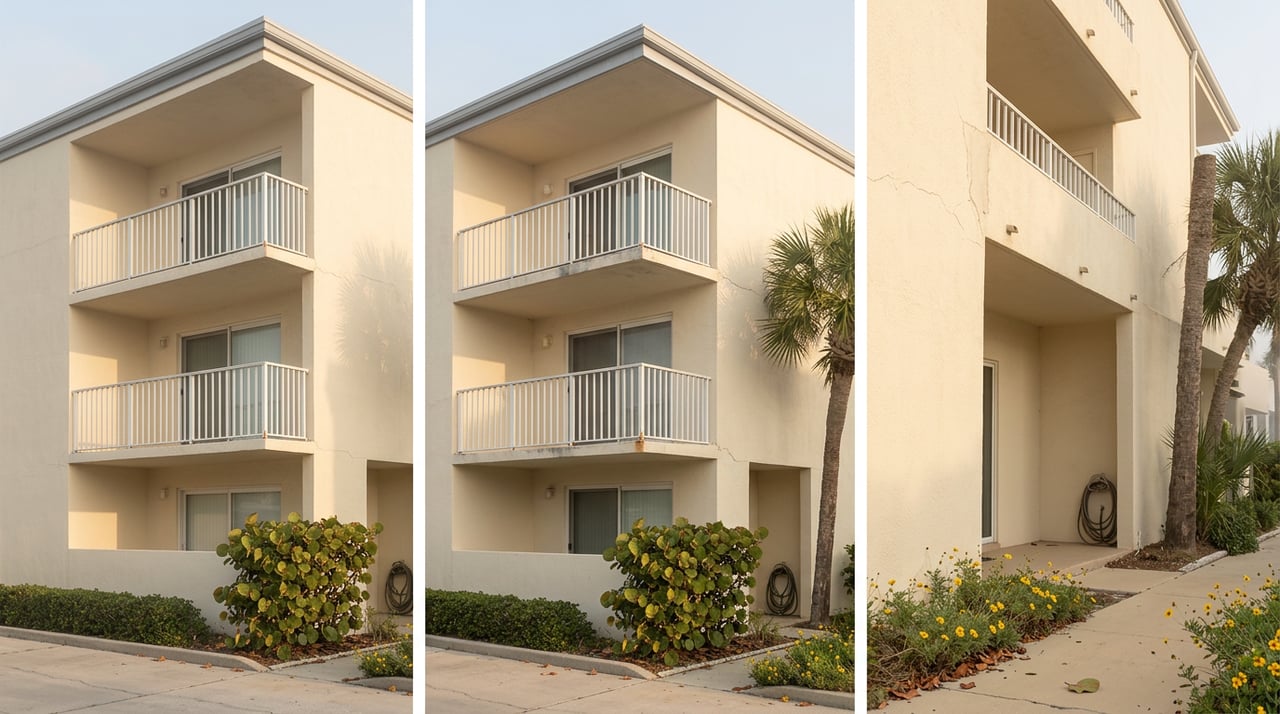
Here's the part that changes the math for a lot of buyers: the city's own transient rental code, Section 3.09.00, explicitly does not apply to condominium units. Condos operate under a different mechanism entirely. Instead of competing for one of the 100 permits, a condo needs a Business Tax Receipt filed under tax code 69, which covers hotels, motels, apartments, and condos for rent, and multiple units in the same building can be covered under a single receipt. In practice, that receipt is usually held by the condo association, not the individual unit owner.
That means the binding constraint on a condo isn't a city permit cap at all. It's whatever your HOA's Business Tax Receipt allows, and whatever your association's own rental rules say on top of that. A buyer who assumes their unit is one of "the 100" might be relieved to learn it isn't, or might discover the association has rules more restrictive than the city ever imposed. Either way, the number quoted at the open house was never the number that governs their unit.
The condo carve-out is only half the picture. The other half is that St. Augustine Beach is not the only government with rental rules on this coast, and its rules don't extend past its own boundary.
| Jurisdiction | Zoning gate | Key limit | Notable requirement |
|---|---|---|---|
| City of St. Augustine Beach | Commercial or Medium-Density Residential only | 100-permit cap in Medium-Density Residential; no cap in Commercial | Condos exempt from the cap, operate under a Business Tax Receipt instead |
| City of St. Augustine (separate city) | RS-1, RS-2, HP-1, or other | Weekly minimum in RS-1/RS-2, no nightly rentals; monthly minimum in HP-1; nightly allowed elsewhere | Annual Fire Department life-safety inspection required at registration and every year after |
| Unincorporated St. Johns County (east of the Intracoastal) | County Land Development Code | 10-guest occupancy cap, one parking space per three guests | Registration required and renewed annually, with exemptions for owner-occupied units and HOA-managed buildings |
A property a mile inland of St. Augustine Beach's city limit isn't subject to the 100-permit cap or the condo carve-out at all. It's answering to St. Johns County's Land Development Code instead, which has its own separate mechanics.
That county rule deserves its own attention, because it's easy to miss if you're only researching "St. Augustine Beach" and assuming everything nearby follows the same code.
When St. Johns County passed its short-term rental ordinance in 2021, it set a 10-guest occupancy limit, not counting children 12 and younger, along with a requirement of one parking space for every three guests and one garbage can for every four. The county built in a phase-in period so existing rentals had three years to comply rather than being cut off overnight. That phase-in window closed around 2024. By now, in 2026, the 10-guest cap and parking ratio aren't a future consideration for county properties. They're already the operating rule for every unincorporated rental east of the Intracoastal that doesn't qualify for an exemption.
One of the people involved in shaping that county rule, Charles Delony of the South Anastasia Communities Association, put the goal in plain terms at the time:
"The point is peaceful coexistence."
The exemptions matter as much as the cap itself. Owner-occupied units, duplexes with at least one owner-occupied side, and multifamily buildings with an HOA, condo association, or on-site property management are carved out of some of these county rules, echoing the same pattern you see with condos inside St. Augustine Beach city limits: the property type and the ownership structure often matter more than the address.
None of this is a reason to avoid a rental purchase near the beach. It's a reason to confirm the right things in the right order, before a contract, not after.
Does the 100-permit cap in St. Augustine Beach apply to my condo? No. Section 3.09.00, which contains the cap, specifically excludes condominium units. Condos instead need a Business Tax Receipt under tax code 69, usually held by the association rather than the individual owner.
I'm looking at a property with a St. Augustine Beach address. Does that mean St. Augustine Beach's rules apply? Not necessarily. Mailing addresses don't always match municipal boundaries. Confirm whether the parcel sits inside St. Augustine Beach city limits, inside the separate City of St. Augustine, or in unincorporated St. Johns County, since each has its own ordinance.
What happens if the Medium-Density Residential permit cap is full when I want to apply? The cap is fixed at 100 permits for that zoning category, so availability depends on how many permits are currently issued. This is worth confirming with the city directly before assuming a house in that zone will qualify for a new permit.
Are the rules the same in the City of St. Augustine as they are in St. Augustine Beach? No. They're two separate cities with separate ordinances. The City of St. Augustine gates rentals by zoning district, with weekly minimums in RS-1 and RS-2, monthly minimums in HP-1, and nightly rentals allowed elsewhere, plus an annual fire department inspection requirement.
Rental rules like these are exactly the kind of detail that's easy to skim past on a listing sheet and expensive to get wrong after closing. If you're weighing a St. Augustine Beach property for its rental potential, or trying to figure out which government actually governs a specific parcel, the team at Lighthouse Realty has spent years working this exact stretch of coast and can help you sort out which rules apply before you write an offer. Contact Us.
Lighthouse Realty has been in business in the St. Augustine area for over 30 years. We are open 7 days a week to provide you with the best real estate service in St Augustine.