Before You Write an Offer at Colony Reef Club, Read the Rule Fannie Mae Didn't Change
If you have been watching the condo financing headlines this year, you probably heard the good news first. In March, Fannie Mae and Freddie Mac tore up a rule that had quietly blocked financing in buildings with a lot of renters. If you are shopping for a unit at Colony Reef Club on Anastasia Island, that headline is not the one that matters to you. The rule that got easier this year was never the rule standing between you and a conventional loan here. A different rule, one nobody retired, is the one worth understanding before you sign anything.
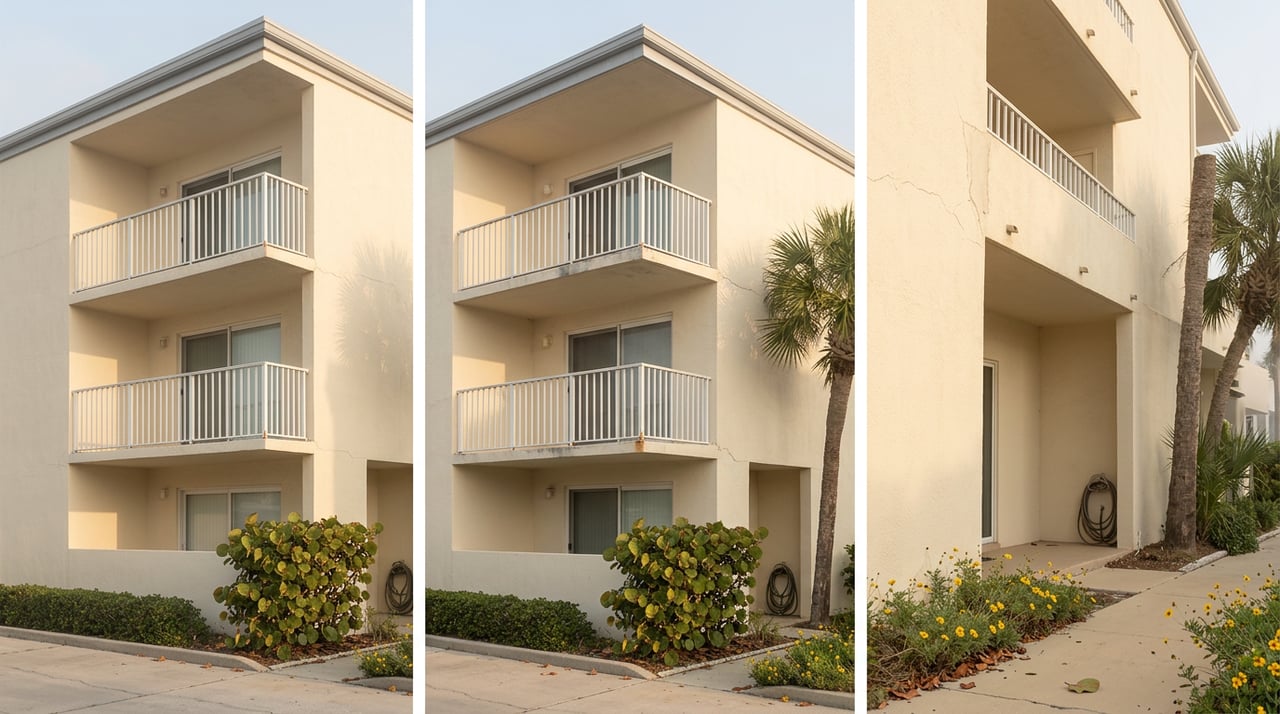
Colony Reef Club is a 132-unit complex built in 1985, arranged in a U shape along A1A South with direct beach access. It runs its own on-site rental program, one that books condos nightly and weekly the way a small resort would. That detail, more than anything in the March headlines, is what a lender will actually scrutinize.
On March 18, 2026, Fannie Mae and Freddie Mac issued coordinated updates to how they evaluate condo buildings for conventional financing. The most publicized change eliminated the rule that made a building ineligible if more than half its units were owned by investors rather than occupied by their owners. That cap had shut a lot of downtown high-rises and vacation-heavy buildings out of conventional lending for years, and its removal is real relief for a lot of buyers around the country.
But retiring the investor-concentration cap does not touch a separate, older rule buried in Fannie Mae's Selling Guide, and that separate rule is the one built for buildings like this one.
Fannie Mae's guide on ineligible projects disqualifies a project from conventional financing if it operates like a hotel. Two conditions trigger that disqualification: the association is licensed as a hotel, motel, resort, or hospitality entity, or the project's legal documents restrict an owner's ability to occupy their own unit during any part of the year. Neither of those conditions has anything to do with how many units are investor-owned. They are about how the building itself is set up to operate.
Colony Reef Club runs its own on-site rental agency, and the association's own materials describe colonyreef.com as the shared site for both the rental agency and the condominium association. That is not proof the project fails Fannie Mae's hotel test. It is exactly the kind of overlap between association and rental operation that a lender's Full Review is designed to check. You will not know which side of that line your specific building falls on until someone actually pulls the governing documents and asks.
Here is a detail that gets lost in most condo guides because they treat a complex as one building when it is not. Colony Reef Club has two distinct sections. The oceanfront buildings, the ones with the ocean and pool views most buyers picture, are four stories. The tennis villas section is a separate group of units that are one or two levels, with two bedrooms and two to two and a half bathrooms.
That distinction matters because Florida's milestone inspection and Structural Integrity Reserve Study requirements apply only to buildings three stories or taller. A unit in the four-story oceanfront section sits squarely inside that regulatory scope. A unit in the one or two-level tennis villas section may not. If you are comparing two listings in the same community, do not assume they carry the same inspection history, the same reserve obligations, or the same financing conversation. Ask which section, and ask which rules apply to that specific structure, before you compare price per square foot.
Two days ago, on August 3, 2026, Fannie Mae eliminated its Limited Review process for condo projects with more than 10 units. Limited Review used to let a lender approve a loan with a lighter look at the association's finances. Full Review, the process that remains, means the lender examines the budget, reserve funding, delinquency rates, insurance coverage, litigation status, and yes, whether the project looks like a hotel.
With 132 units, Colony Reef Club never had a shot at the small-project waiver that still applies to buildings of 10 units or fewer. Every conventional loan here now goes through Full Review, no shortcuts, starting this week.
| Limited Review (retired Aug. 3, 2026) | Full Review (now mandatory here) | |
|---|---|---|
| Reserve funding | Spot-checked | Fully documented against the SIRS |
| Insurance | Basic confirmation | Master policy and per-unit deductible verified |
| Rental operation | Rarely examined closely | Checked against the hotel-operation rule |
| Litigation | Limited disclosure required | Full disclosure required |
If you have looked at Colony Reef Club listings in the past year, you likely noticed a notice attached to nearly every unit: the property was under construction from October 2025 through April or May of 2026. The notice does not say what the work was for, but the timing lines up closely with two separate compliance deadlines that hit this exact building profile.
Florida's Department of Business and Professional Regulation requires that condominium associations that existed before July 1, 2022 and are controlled by unit owners complete a Structural Integrity Reserve Study by December 31, 2025. Starting January 1, 2026, those associations can no longer vote to waive or underfund the reserves that study identifies. An eight-month capital project that wrapped right as that funding requirement kicked in is not proof of anything specific, but it is consistent with a building working through exactly the kind of deferred maintenance that a new reserve study tends to surface.
If you are looking at a unit in the four-story oceanfront section, ask directly whether that construction was tied to the SIRS findings, and ask to see the study itself. A seller who cannot produce it, or who produces one dated before the requirement took effect, is telling you something about how prepared the association is for what comes next.
As of May 23, 2026, three units at Colony Reef Club were listed for sale with an average asking price around $625,000. That number tells you what the market thinks the view and the location are worth. It tells you nothing about which of those three listings will clear Full Review without a hitch and which will send a buyer looking for a portfolio loan instead. That answer lives in the documents above, not in the listing price.
Does paying cash avoid all of this? It avoids the financing hurdle, but not the underlying risk. A building carrying deferred reserve funding or a pending special assessment still affects what the unit is worth when you eventually sell, and a future buyer's financing options become your resale problem.
Do VA loans follow the same Fannie Mae rules? No. FHA and VA loans use their own separate project approval processes rather than Fannie Mae's or Freddie Mac's guidelines. A building that struggles with conventional Full Review is not automatically excluded from VA financing, but it is not automatically eligible either. A VA-approved lender needs to run the building through the VA's own review.
If the building fails Full Review after I already own there, does it affect me? It can. A project's warrantable status is not tied to your specific loan once you already own the unit, but it directly affects the pool of buyers who can finance a purchase from you later. A building that loses warrantable status typically sees fewer offers and longer marketing times, because cash buyers and portfolio-loan buyers make up a smaller share of the market than conventional buyers do.
Colony Reef Club is a genuinely good place to own a slice of the beach, and none of this is a reason to walk away from it. It is a reason to ask sharper questions before you write an offer, and to ask them of someone who has spent time in this specific building rather than reading the same national guide everyone else has already seen. Lighthouse Realty has been walking St. Augustine buyers through exactly these documents for years. If you are looking at a unit here, reach out before your financing contingency starts the clock.

Lighthouse Realty has been in business in the St. Augustine area for over 30 years. We are open 7 days a week to provide you with the best real estate service in St Augustine.