Which Summerhouse St. Augustine Rental Rules Really Apply?
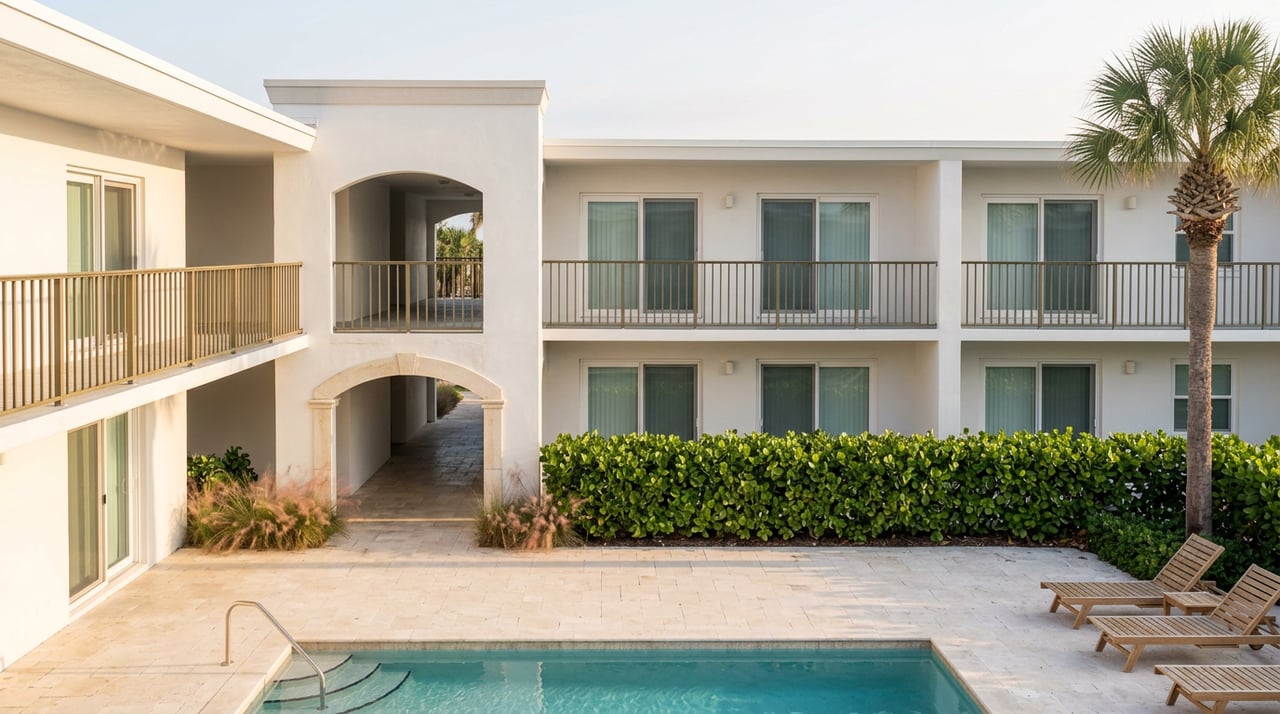
Drive to the southern tip of Anastasia Island, past the last curve of A1A before Fort Matanzas, and you land at 25 acres of pool decks, tennis courts, and low-rise buildings that have been renting out rooms since 1982. Summerhouse Beach & Racquet Club runs its own front desk seven days a week, out of an on-site rental office that has booked guests into its 256 individually owned units for over four decades. If you're shopping this complex as an income property, that on-site office is also the reason a rule you probably already researched doesn't touch you the way you think it does.
Anyone vetting a short-term rental purchase in unincorporated St. Johns County eventually finds the county's 2021 vacation rental ordinance, as Avalara reported. It's the document that shows up first, the one that lists registration requirements, occupancy caps, and parking ratios for rentals east of the Intracoastal Waterway. Crescent Beach, where Summerhouse sits, is unincorporated county land, not the City of St. Augustine and not St. Augustine Beach. So it's reasonable to assume that ordinance is your rulebook. For a Summerhouse unit, it mostly isn't.
St. Johns County's short-term rental ordinance was built to bring accountability to a fast-growing rental stock in unincorporated areas, the single-family homes and duplexes scattered through Ponte Vedra Beach, Vilano Beach, and the stretch of coastline south of the city limits. It requires annual registration with the county, a Florida Department of Business and Professional Regulation license as a transient public lodging establishment, a Florida Department of Revenue sales tax certificate, and compliance with the county's noise ordinance. It caps occupancy at ten guests regardless of bedroom count, as Crest Cove's compliance guide explains, and it sets parking at one off-street space for every three occupants, as STR Profit Map reports. That cap was phased in over three years for rentals already operating when the ordinance passed
That's the framework someone searching "St. Johns County short-term rental rules" will land on. It's accurate. It's also written with a specific carve-out that most people skim past.
The ordinance exempts multifamily properties governed by a homeowners association, condo association, or on-site property management. Summerhouse checks that last box directly. It's a condominium association, which Florida's Division of Corporations records as incorporated in 1980, with an on-site general manager, an assistant general manager, and a rental office that has run bookings out of the same address for decades.
That distinction matters because it changes what a buyer actually needs to check before closing. The county's registration portal, occupancy math, and parking ratio aren't the compliance trail for a Summerhouse purchase. What the carve-out does remove is the county-level paperwork and the county's specific occupancy formula. In its place sits a different, older, more particular set of rules: the ones Summerhouse's own board has been enforcing since long before the county ordinance existed.
Summerhouse's Rules and Regulations, adopted by its board under its Declaration of Condominium, read less like a government ordinance and more like a lease you inherit the moment you close. A few of the ones that shape what you can actually do with a rental unit:
None of that comes from St. Johns County. The association last revised the document in December 2022, according to Summerhouse's Rules and Regulations, and enforces it through its own general manager, not through code enforcement.
It's tempting to read the county exemption as less oversight, full stop. That's only half the picture. Summerhouse's own rules set limits on age, pets, and parking. A family traveling with a dog, a group of college-age friends without an older chaperone staying the full trip, or a reunion that needs three or four cars parked on-site will bump into the association's limits.
For a buyer running the numbers on a Summerhouse unit as a rental, that changes the addressable guest pool in ways a generic county-rules search won't surface. It also means the real ceiling on your rental income isn't a government occupancy cap, it's whatever booking calendar the on-site office or your chosen management company can fill within the association's own guest restrictions.
If the county ordinance isn't your compliance document, the paperwork that matters shifts to the association itself. Before writing an offer on a Summerhouse unit with rental income in mind, it's worth requesting:
None of this is complicated. It's just a different five documents than the ones a generic short-term rental guide will tell you to chase.
Do I still need to register my Summerhouse unit with St. Johns County? The county's 2021 ordinance carves out condominium properties with on-site management, which is the structure Summerhouse operates under.
Can I rent my unit through a company other than the on-site office? What doesn't change is which set of guest rules applies, since the association's Rules and Regulations bind the unit no matter who books the reservation.
What happens if a guest breaks one of the association's rules? The standard fine is $25 per occurrence, escalating to eviction from the unit for repeat violations. Pet violations carry an additional $200 service and cleaning fee.
If you're weighing a Summerhouse unit against other rental-ready condos on Anastasia Island, or trying to figure out which of St. Johns County's overlapping jurisdictions actually applies to a property you're considering, that's exactly the kind of groundwork Karen Lindsey and the team at Lighthouse Realty walk through with buyers before an offer ever gets written. Contact us and we'll help you separate the rules that sound relevant from the ones that actually govern your closing.
This article is general information, not legal, tax or financial advice. Consult a qualified professional about your situation.

Lighthouse Realty has been in business in the St. Augustine area for over 30 years. We are open 7 days a week to provide you with the best real estate service in St Augustine.